Designing Dungeons

Since I’m in the middle of designing a big dungeon right now, I really want to talk about actual dungeons, as in, “…and dragons:” dark, damp, underground complexes filled with danger and—as the characters hope—treasure.
The Big Picture
Lots of writers, including myself, have written about how a “dungeon” can be anything—a castle interior, a sewer system, a large spaceship, a cavern system, or even a city. In fact, any RPG adventure can be organized as a flowchart. You have “encounters” and connections between the encounters, just as a dungeon has rooms and corridors.
It’s handy to think about the connections between encounters and how the potential paths the players might choose affect things, even when designing an event-based (as opposed to location-based) adventure, because it will have you asking yourself questions like, “How do the characters get from this encounter to that one?” “How do they get out of this encounter if they want?” or even, “How will the players know that they’ve completed the adventure?”
Because flowcharts are really just simplified dungeons (or rather, dungeons are disguised flowcharts), I think dungeon design advice can really apply to any adventure. And what I really want to talk about is actual dungeons, as in, “…and dragons.” Not something that just can be treated as a dungeon, but a dark, damp, underground complex filled with danger and—as the characters hope—treasure.
Limitations are Good, Actually
Dungeons are cool because they limit the players. Now that might sound bad, but hear me out. One of the charms of RPGs is that you can do anything, right? It’s true, but having limitless options can be just as daunting as it is freeing, if not more so. In reality, rather than in theory, the players have been at work or at school or taking care of the kids or whatever all week long. Their lives are busy, and they’re always making decisions. Decision fatigue is a real thing. Lots of players find comfort in a paring down of choices. “Do we take the left passage, the right passage, or go back and open that door we found earlier?” That’s a manageable amount of choices, but still enough to be interesting, if—and this is an important if—the players have enough information to make intelligent choices. They hear rushing water off to the left, there were claw marks on that door, and the hobgoblin they allied themselves with told them to go right. What do these clues mean? Exploration allows them to find out. Without those clues, however, it’s basically a meaningless decision, to the point where there might as well only be one option.
This seemingly counterintuitive idea of limitations on creativity exists anywhere. A screenwriter can have the characters do a lot of different things, but they can’t have the characters break into song unless it’s a musical, or climb aboard a starship unless it’s science fiction. And more specifically, the characters have to undertake actions that are comprehensible and suitable to what’s been established about them before unless there’s a good reason. A painter has a finite number of colors to work with. A novelist has to use words with meaning, etc. etc. So limitations might sound bad, but they’re actually good.
GMs benefit from limited options as well. In that dungeon setup, the GM only needs to manage what’s to the right, to the left, or on the other side of the door. Totally doable. So doable, in fact, that a decent GM will have the game mastering bandwidth to make those options more interesting, and more interactive. Like if, say, the dungeon inhabitants off to the right hate those by the water to the left, which is something the players can take advantage of. And so if the PCs drive off the folks to the left, the ones down the right path might give them a way to bypass the trap behind the door. If there are eighteen different options, though, that interactivity becomes a lot more challenging to run.
The Megadungeon
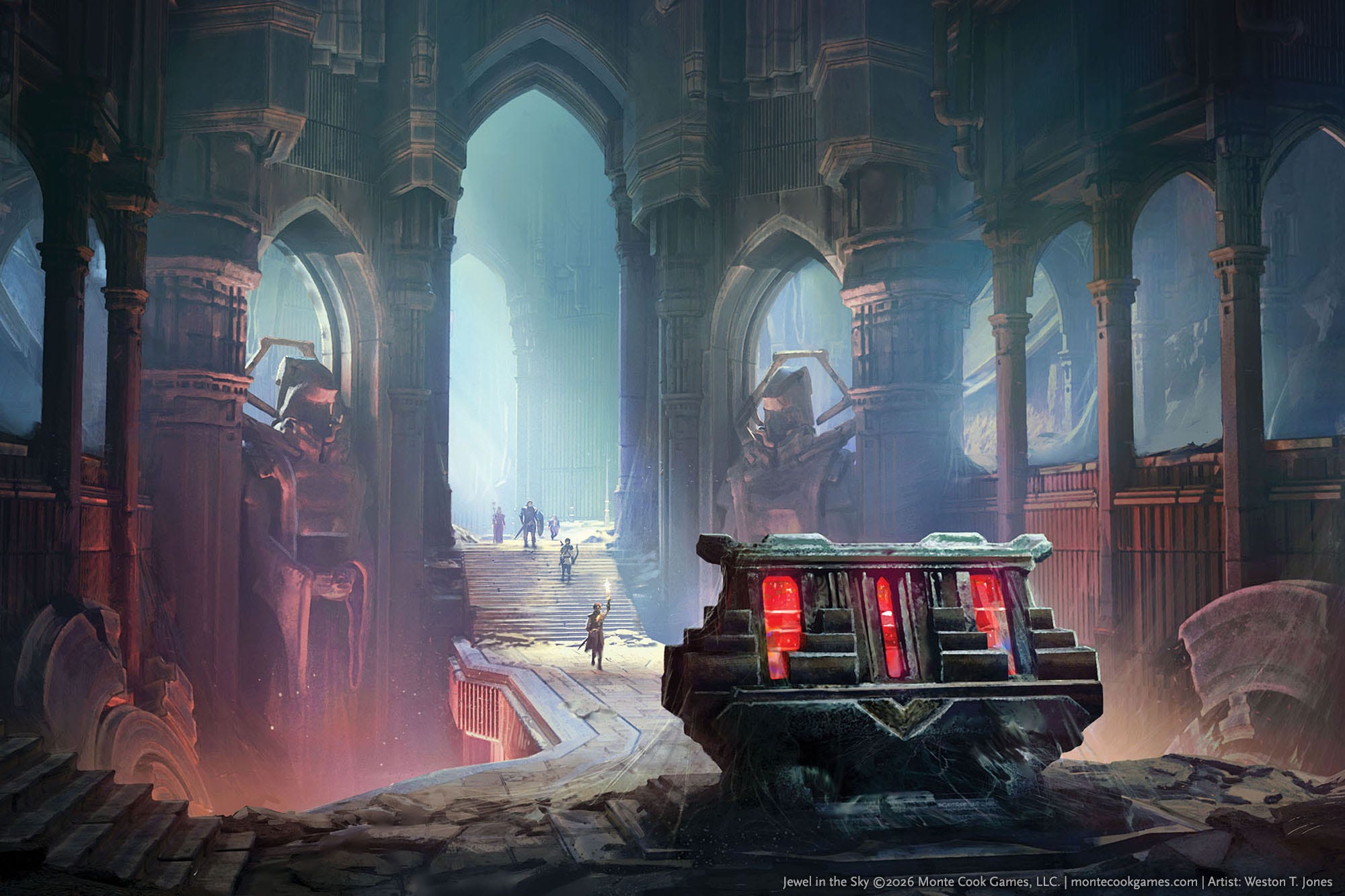
While I’m a fan of all dungeons in concept, what fascinates me the most is the dungeon as environment, as opposed to a city, the open sea, the jungle, or what have you. And to achieve this, you probably need to make the dungeon big. Somewhere along the way, big dungeons became known as “megadungeons,” and so we’ll go with that.
The megadungeon, or just the Dungeon (capital D), is a unique environment that is completely focused on the very idea of an RPG adventure. Combat, treasure, environmental challenges, and puzzles, all relatively close together.
Tolkien can write about his characters exploring the Mines of Moria, and it’s thrilling, surprising, entertaining, and more. But it’s not the same kind of narrative an RPG group creates if they explore a dungeon, even if it’s an extremely similar location. Tolkien decides that the Fellowship finds Ballin’s Tomb before they get to the Bridge of Kazad Dum, but in the RPG, the players decide. The players (and thus, their characters) have agency in a way a novelist’s characters never could, by definition.
Now, you might say that a novelist can elegantly weave the events into a coherent, meaningful narrative, while events in the RPG dungeon are just unconnected, random encounters. But I would take issue with that. A good designer can feed the GM the story threads such that a meaningful and rewarding narrative can arise out of the encounters, even though neither designer nor GM knows which encounters will make it to the table, in what order, and how they’ll be dealt with.
In the worst case—where the designer has just given the GM a bunch of seemingly random, unconnected encounters—it’s up to the players to wholly develop the narrative into something meaningful. In the best case, the designer has provided the GM with enough connections and backstory so that the story emerges from the encounters. At first, it might just seem like a combat encounter, an environmental challenge, and then an interaction, but when they’re done, the players will see that the monster was guarding the entrance at the behest of a mind-controlling vampire, the environmental challenge came from crossing a crumbling bridge that the aforementioned monster damaged before being mastered by the vampire, and the interaction is with a victim of the vampire who has valuable information for the PCs if they’ll help them escape.
And the chef’s kiss aspect of this is that if the players made different choices in which encounters they experienced, how many they experienced, how they dealt with them, and in which order, the narrative emerges regardless. They face the guardian monster, but rather than crossing the bridge, they find a secret passage that takes them into a private chamber of the vampire that—when they search—reveals not only the vampire’s nature, but grants them clues to the villain’s background and secrets to how he can be destroyed. This chamber leads to an encounter with victims mesmerized by the vampire and eventually a chapel devoted to his dark gods.
Again, it’s just a combat encounter, an exploration challenge, another combat, and a spooky scene. But as they weave together, they form a thrilling, cohesive narrative exploring a vampire’s lair.
It might not be the same narrative as the one first described, but that’s actually a good thing. Because we want the players and their characters to have agency, and we want their choices to matter.
The different encounters constellate into a narrative, like when ancient stargazers looked up into the night sky and linked stars that have little or no relation into a single representative image—a constellation. The encounters in aggregate create an emergent story. And the best part is that the threads weaving the encounters together are the characters—the most important part of RPG play.
That’s why when I design a dungeon, I seed it with what I call “potential character moments.” These can play to a character’s skill or abilities, but what’s even better is when they bring out the character. A villain threatens to take revenge on the person who matters most to the character that bested him—who is that? A demon steals away a precious memory from the mind of a character—what’s that memory? To get what they want, the character has to pledge an oath that will remain with them for the rest of their days—can they live with that? Just like in any story, the characters should leave the dungeon more fleshed out than when they went in.
Next time, we’ll go deeper into the dungeon and really pick apart some of the specifics—factions, stories, and adventure endings. And more!
Really great to see megadungeons talked about more as a viable campaign structure for modern day!
I tried to make the case for them here: https://icastlight.substack.com/p/why-megadungeons?r=48edr&utm_medium=ios
Read this just because. Stayed because of:
“An in, ‘and dragons.’”
Nice writing. I need a D&D group.