Player Choice

More than anything, a key design goal of the new edition of Cypher has been to not just give players choices, but to ensure that those choices are interesting.
For example, when a PC is attacked in combat, they can choose to try to dodge the attack or use their armor and shield (if they have them) to block the attack. Obviously, the more armor you wear, the easier it is to block, but the harder it is to dodge. But successfully dodging means the attack misses entirely, whereas when you block, you probably still take some damage. And different kinds of attacks might be more easily blocked than dodged or vice versa. This makes every round of the fight potentially even more interesting and dynamic.
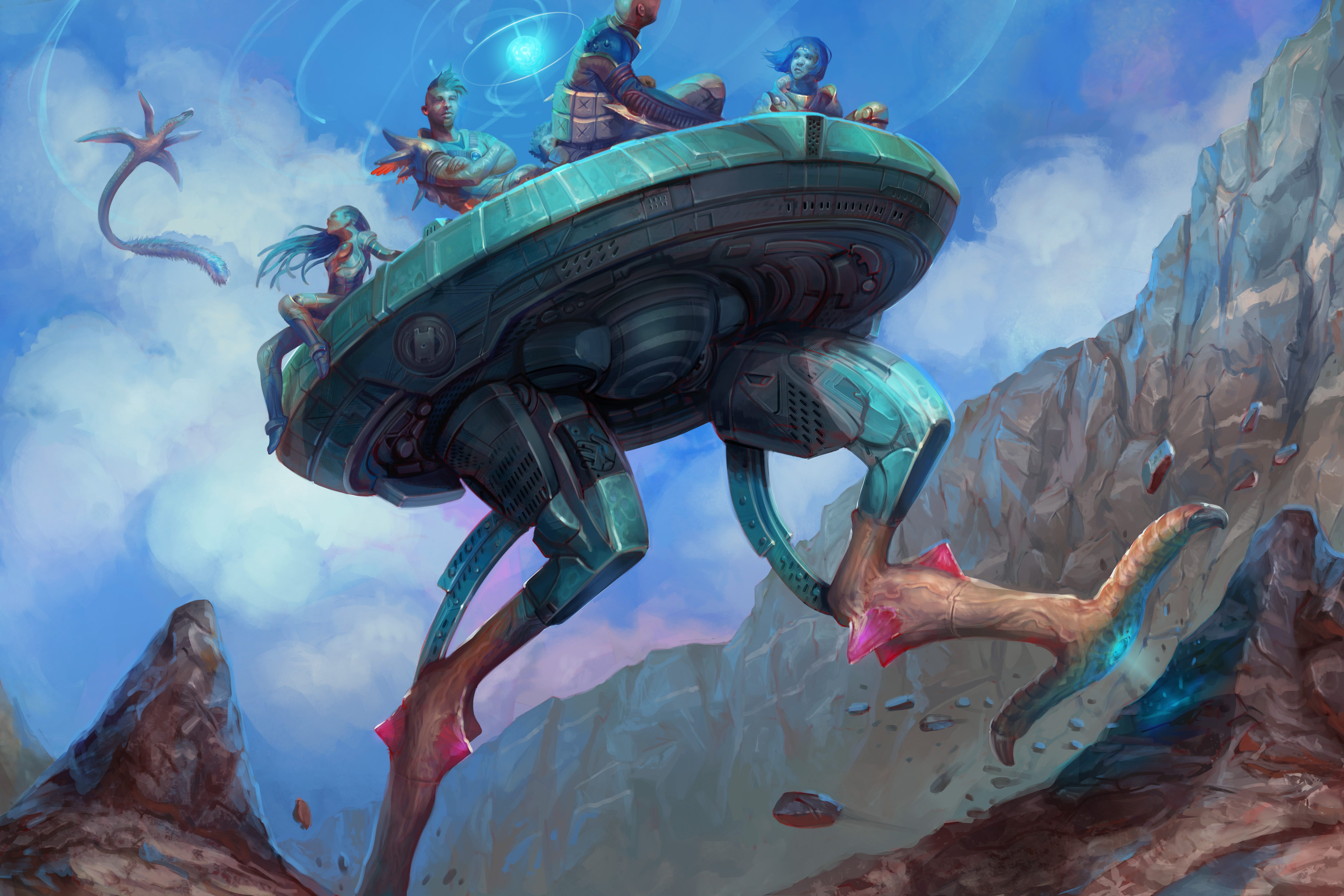
A major way we’ve introduced more choice is through each character’s focus. In the original Cypher System (and its granddaddy, Numenera) you chose a focus for your character, and then you got an ability every time you gained a new tier. The choice was interesting, but you only made that choice at character creation.
In Cypher, each focus has its own “flowchart” of weaving paths of abilities. In some games (mostly computer RPGs) these are called skill trees. You can move up and down the tree as you desire, to get the abilities you want, as long as you follow the path. In other words, you start with a couple of Tier One abilities, and then when you advance, you can take a Tier Two ability or you can take another Tier One ability. As you go through your PC’s life, you can keep reaching for higher-tier abilities or you can go back and choose a different path.
From a design perspective, this was a lot of work, because it meant not just reorganizing the abilities but creating a lot of new ones. This, however, is a boon to the game, because it allows us to create varied abilities that fit each focus. Under the old paradigm, when you thought of an idea for a focus, like Commands Mental Powers, you basically had to mechanically define that focus with six abilities, no more, no less (we eventually started adding a choice of two abilities at Tier Three and Tier Six, but the point remains). In this new paradigm, we can take anything that seems appropriate to Commands Mental Powers and present it as an option somewhere in its tree.
Combat is a way that a lot of people look at a game’s “balance” (in some later article, I’ll explain why I put that term in quotes). That fact created pressure to offer a lot of combat-related abilities in the foci, because we didn’t want one focus to appear to be more “powerful” than another. The new paradigm gives us the freedom to add in far more abilities that are useful outside of combat. These new abilities give interesting options when PCs interact with NPCs, explore the environment around themselves, travel, gain information, and do all the other things that characters do in a game. These new additions are extremely satisfying from a design point of view, but also give players many more interesting choices each time their character advances.
To use an entirely different metaphor, if the old way was like choosing which train to board at Tier One, and then just riding that train wherever it took you, the new way is more like taking that same trip by car and choosing which road to take, where to stop for lunch, and so on.
Systems like these really appeal to me as a ruleslite DM who loves encouraging players to play more with the world. GENESYS has a similar tiered skill system - I think the Star wars RPG it's based on goes more traditional with a skill tree. The thing I like that GENESYS does instead of having a tiered skill system that requires having so many of the next lowest tier as a requirement for the following. By then having a lot of fun and cool options for skills it encourages players to experiment more with ways to play on type and be creative. I've never played Cypher but I'm becoming more curious to find an excuse to try!
As a Solo player I am looking forward to this. Rules lite and player facing seems perfect for emulation